What type of leather do I have?
Smooth leather, aniline leather, nubuck, synthetic leather or Alcantara differ fundamentally in terms of cleaning, care and repair.
Different types of leather →
Identifying leather types, correctly assessing damage and selecting the right product: This reference book combines understandable leather knowledge with specific care, repair and color knowledge for cars, steering wheels, furniture and boats.
Important: Not all leather and not all damage is treated the same. Therefore, always start with the material and the type of damage – only then should you select the product.
Smooth leather, aniline leather, nubuck, synthetic leather or Alcantara differ fundamentally in terms of cleaning, care and repair.
Different types of leather →Dirt, grease, paint abrasion, scratches, cracks and holes require different work steps.
Determine damage →Cleaners, degreasers, liquid leather, leather dye, sealants and protectors have clearly separate tasks.
Compare products →Is the surface closed, open-pored, velvety, or a textile or synthetic material?
Is there dirt on the surface, or is paint, coating, or material already missing?
Use only products that are suitable for the type of leather, the damage, and the desired result.
| material | Typical characteristics | What should be taken into account? |
|---|---|---|
| Pigmented smooth leather | Uniform, protected surface; liquid is not absorbed immediately. | Main application area of many VILOU cleaning, repair and coloring products. |
| Semi-aniline leather | Lightly protected, more natural than heavily pigmented leather. | Treat only after careful material inspection. |
| Aniline leather | Open-pored, natural features visible, liquid absorbs quickly. | Not generally suitable for the described standard paint and sealant systems. |
| Nubuck and suede leather | Velvety, sanded surface with visible lines. | Do not use smooth leather dye, liquid leather, or smooth leather sealant. |
| Faux leather/Vinyl | Plastic-coated backing material without natural leather fibers. | Use only expressly suitable products; take into account aging and loss of plasticizers. |
| Alcantara/Microfiber | Textile microfiber, often with a velvety surface. | Not leather. Do not treat with the leather dyes and fillers described here. |
| Perforated leather | Numerous small ventilation openings. | Work very thinly and do not seal openings with paint or filler material. |
A coating is present on an otherwise intact surface. Clean it first, allow it to dry completely, and then reassess.
Dark or greasy areas often appear on steering wheels, headrests, and armrests. Degrease thoroughly before repair or painting.
The surface is structurally intact, but the pigment layer and color are worn. Prepare, apply a thin coat of color, and then protect.
Superficial lines can be smoothed and color-matched after cleaning. Deep scratches may require filler.
Open or loose edges must first be stabilized. Paint alone will not close a crack.
Missing material and damaged seams require professional backing or skilled repair.
Removes suitable water- and dirt-based surface contaminants. It is the first step before maintenance and many repairs.
Reduces grease, oil, silicone and care product residues that can impair the adhesion of repair material or leather dye.
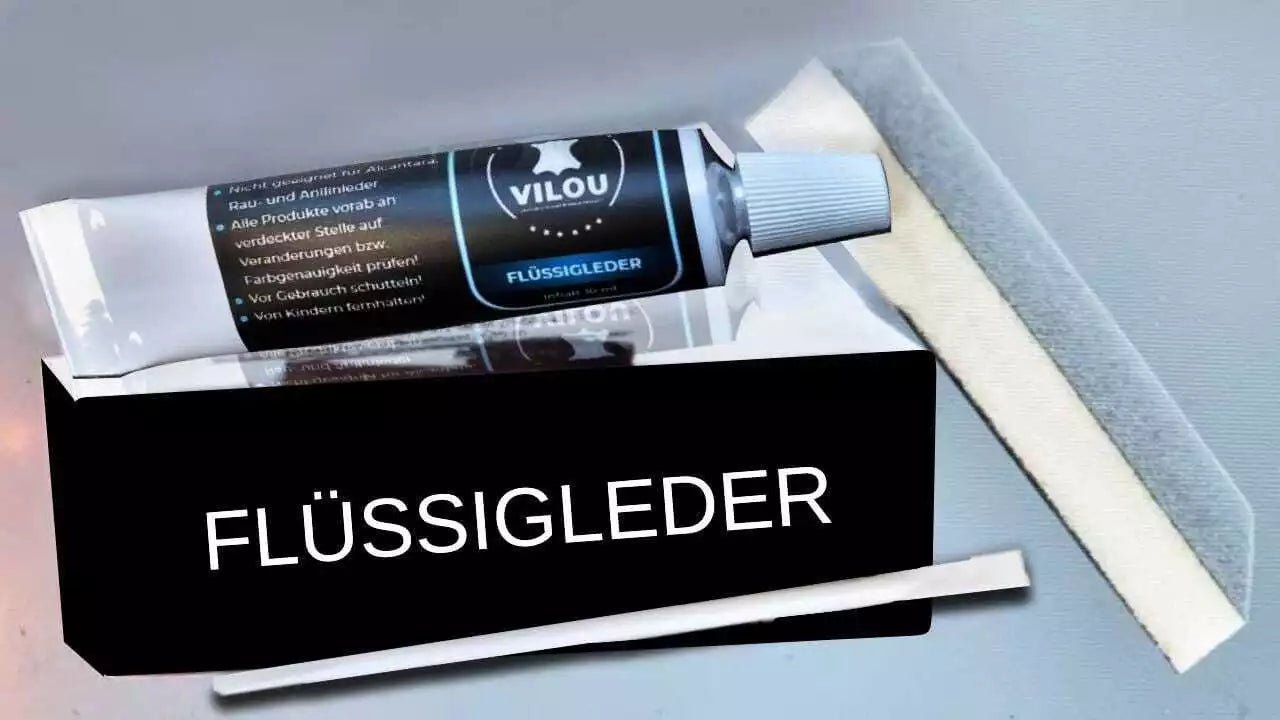
It fills small depressions, surface cracks, and imperfections. It is applied in several thin layers and smoothed after drying.
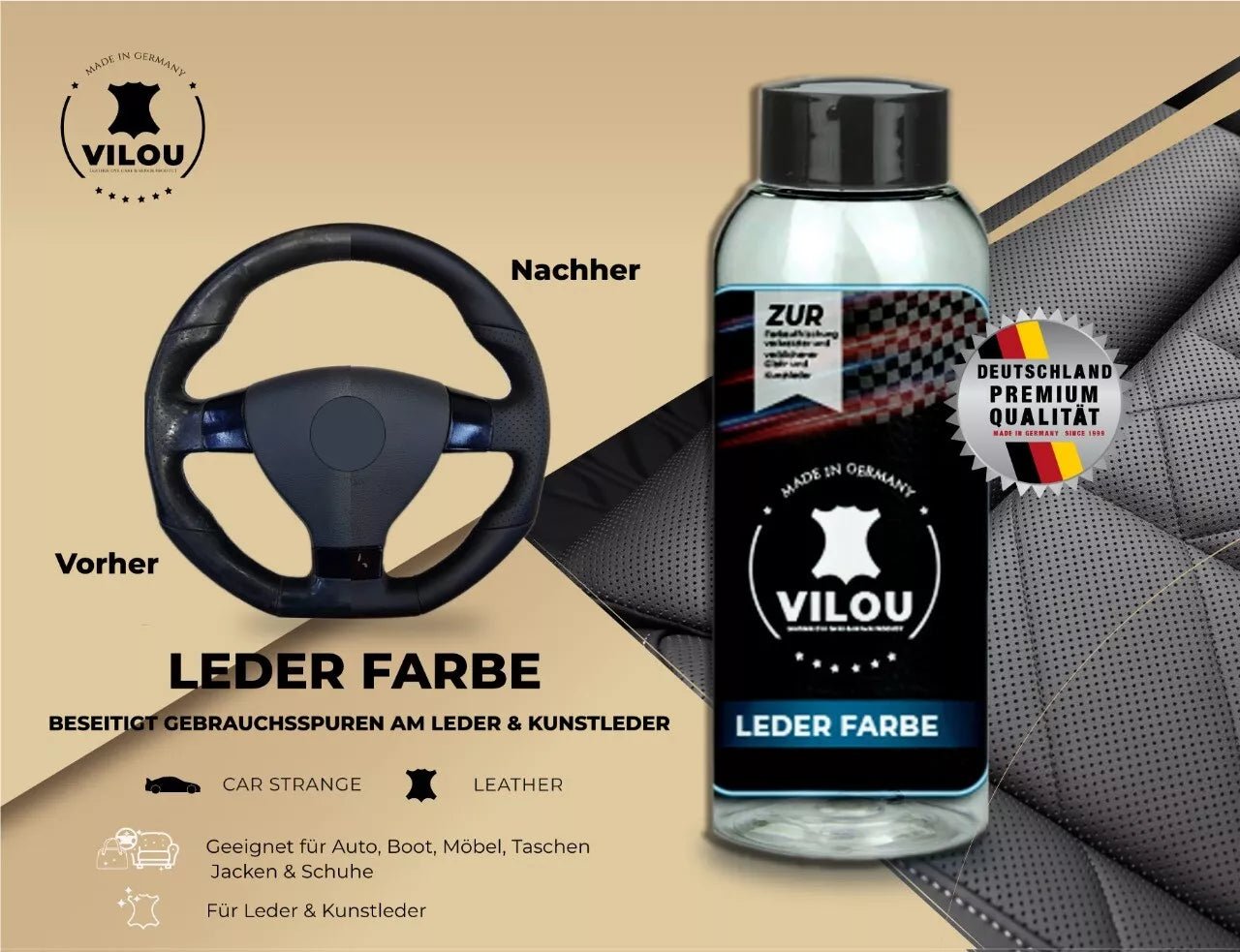
Refreshes the color of suitable pigmented smooth and synthetic leathers. First, select automotive or furniture leather colors; if the desired shade is unavailable, a sample can be requested.
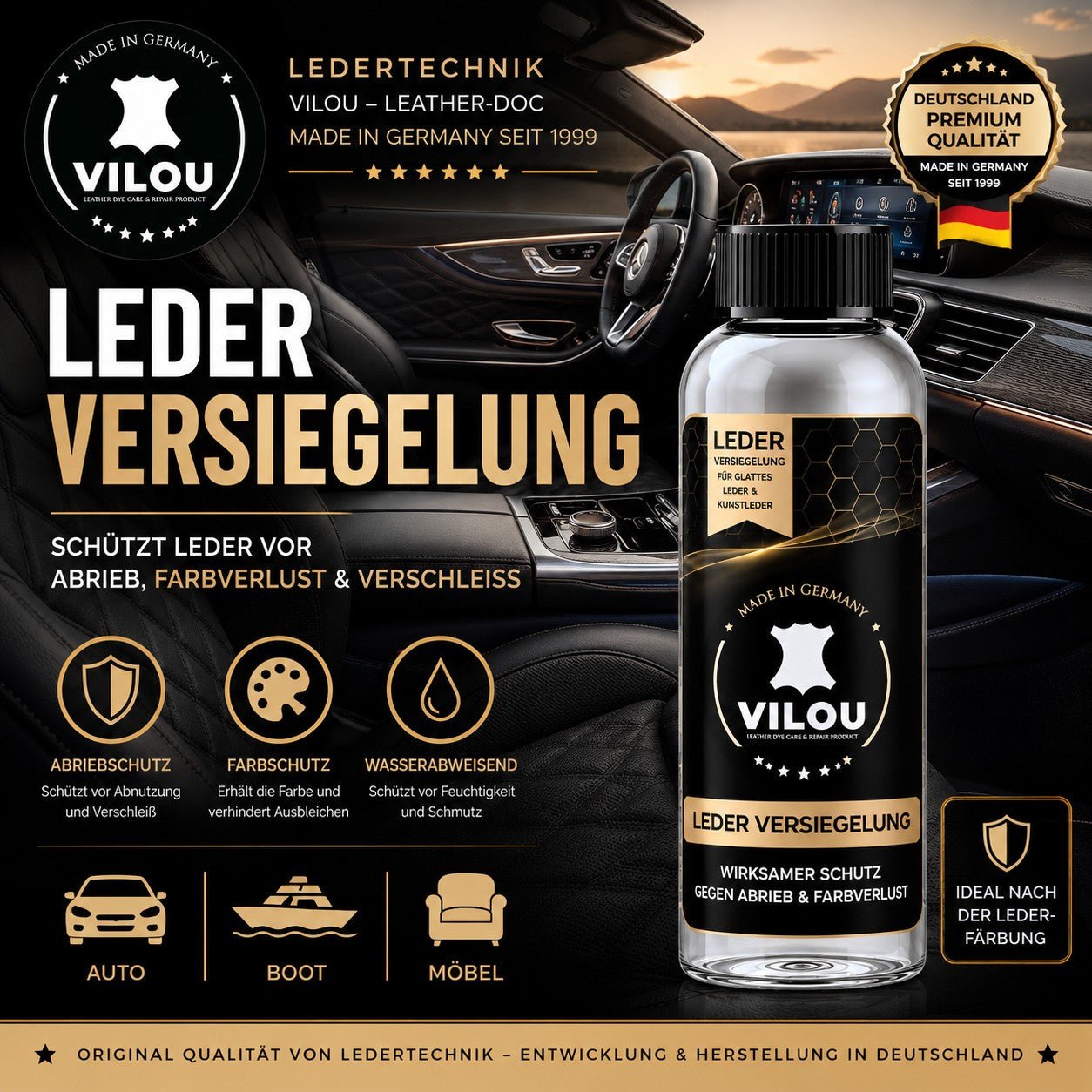
Protects suitable surfaces against wear and tear and discoloration from clothing. It is not a traditional leather care product.
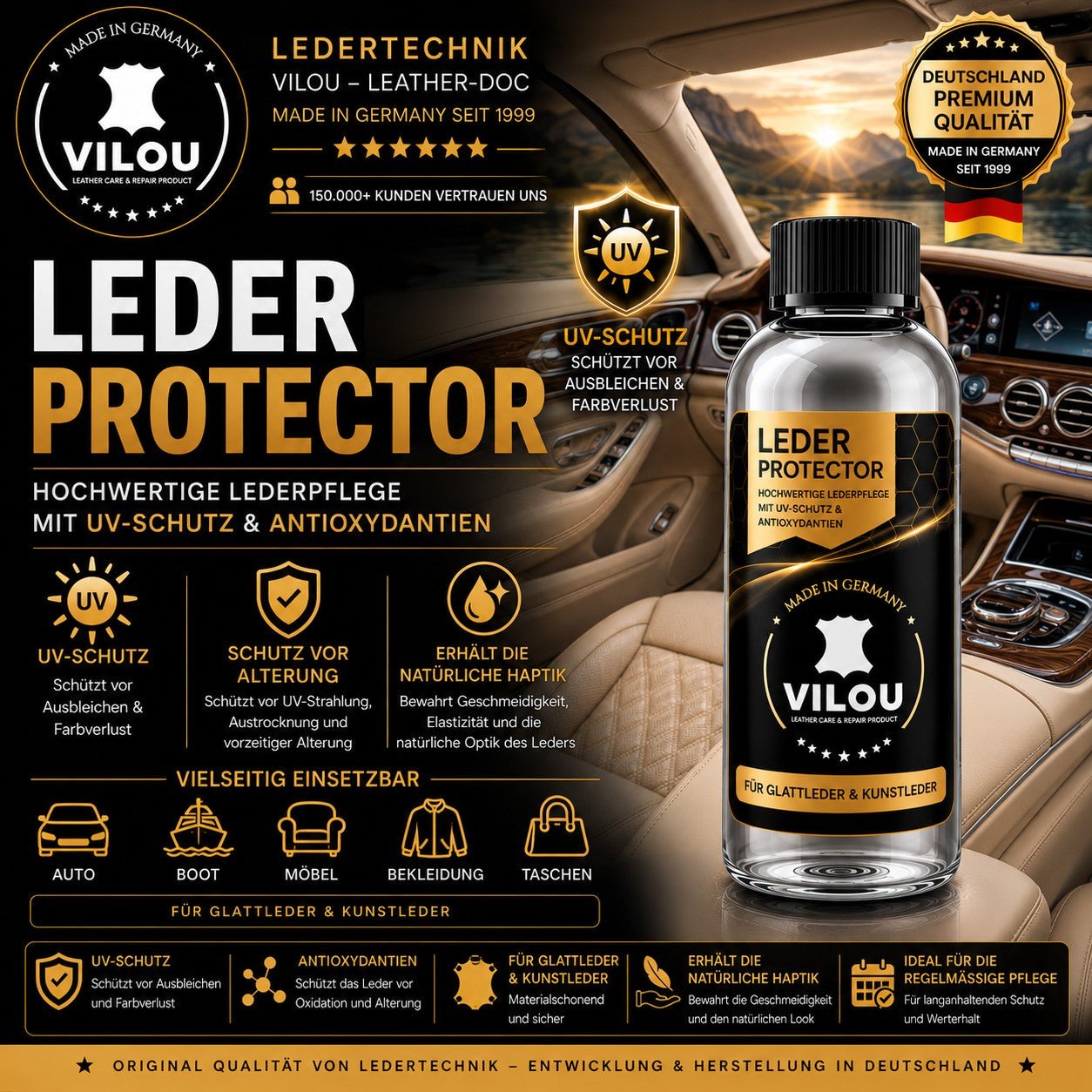
It promotes suppleness and color brilliance, protects against dehydration, and offers UV and aging protection. It does not replace a sealant.
If multiple work steps are required, the kits bundle the necessary components. Before purchasing, check the material, damage pattern, and color.
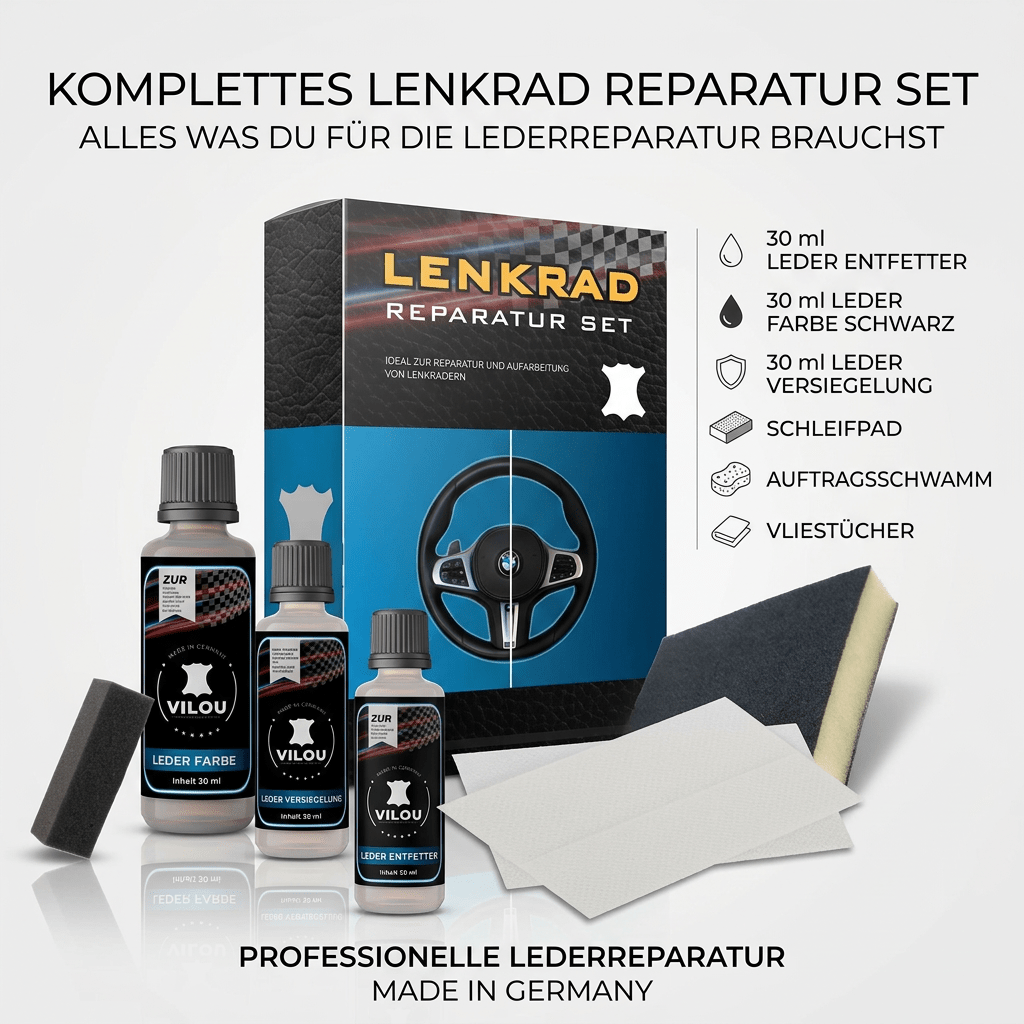
A coordinated system for the refurbishment of suitable leather steering wheels with color abrasion and typical signs of wear.
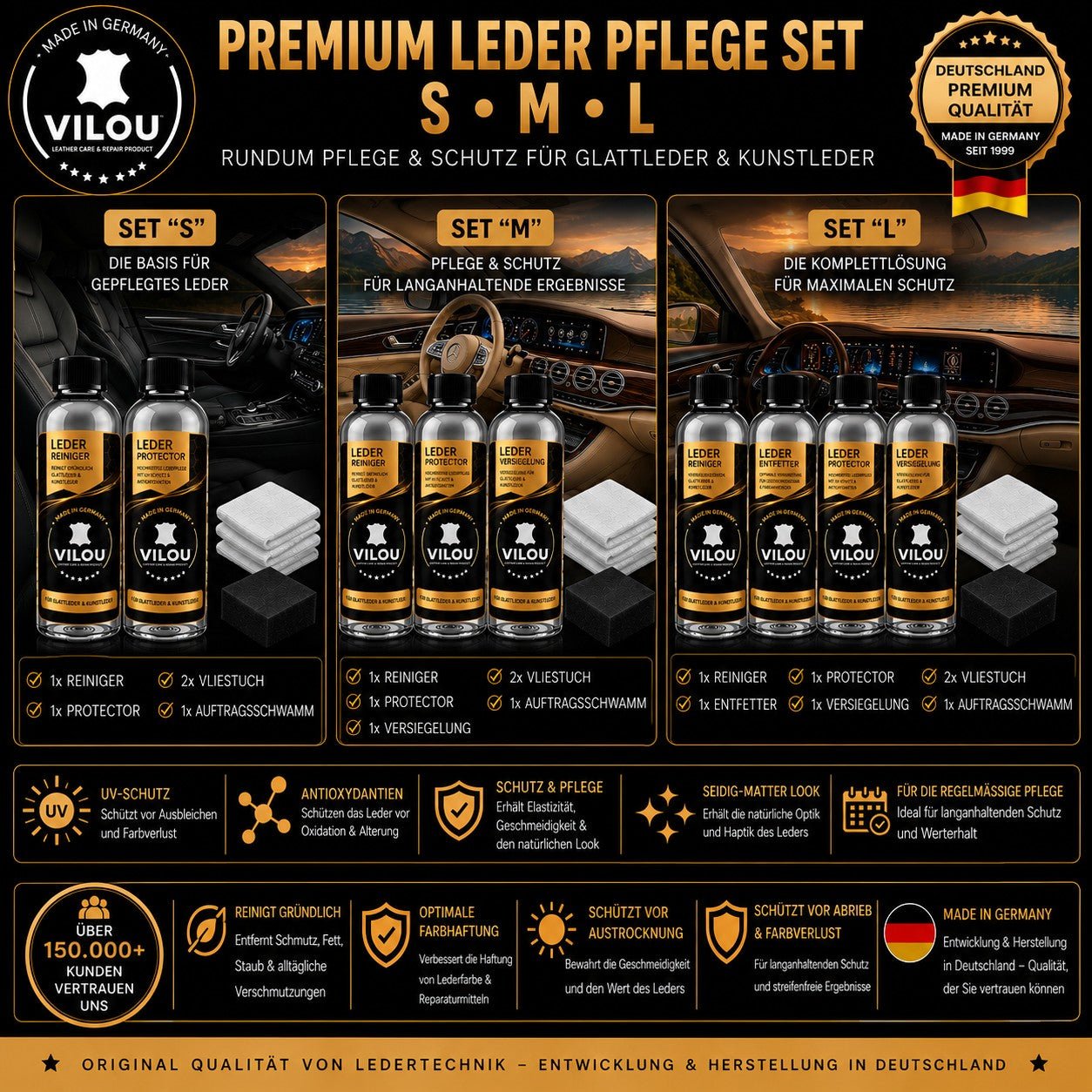
For the coordinated cleaning, care and protection of suitable leather surfaces in the automotive and furniture sectors.
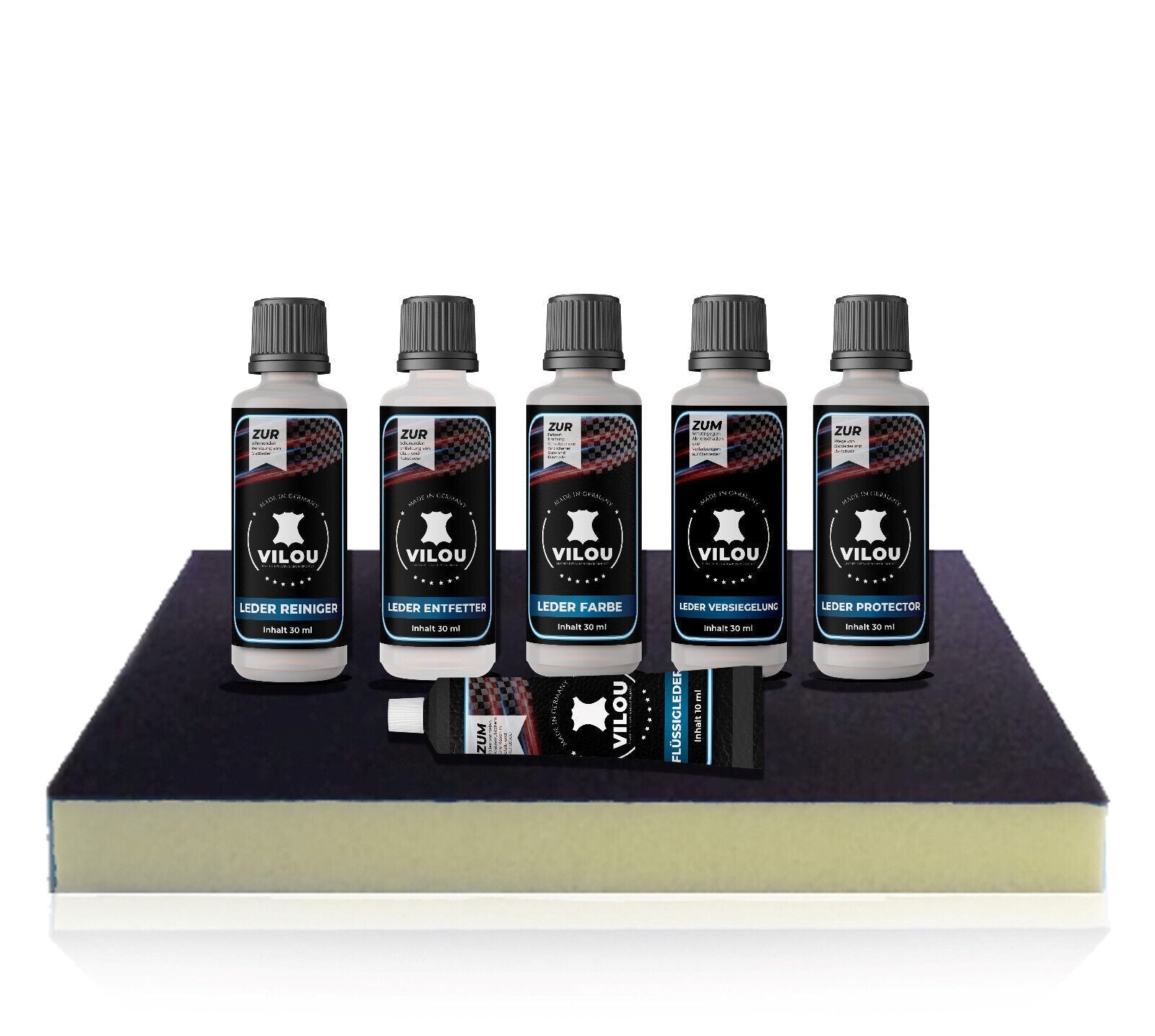
For suitable black smooth leather surfaces with color abrasion and minor repairable damage.
The products complement each other: The sealant primarily protects the surface against abrasion and discoloration; the protector serves for subsequent care and protection against light- and age-related stresses.
Open the search term. The explanations focus on what is practically important for identification, care, repair, and product selection.
Mechanical wear and tear due to friction, for example on seat bolsters, steering wheels, or heavily used furniture areas. If the substrate is intact, the surface can be prepared, refreshed in color, and then protected.
Alcantara is a textile microfiber, not leather. It must not be treated with liquid leather, smooth leather dye, or leather sealant.
Open-pored, transparently dyed leather without an opaque pigment layer. Natural characteristics remain visible. It is absorbent and susceptible to staining; the standard repair and coloring systems described are not universally suitable.
A fine sprayer for controlled, thin coats of paint. The ready-to-use VILOU leather paint can be applied with a sponge or airbrush, depending on the application. The Professional system is designed exclusively for spray application.
Surface structure, which influences appearance and performance characteristics. It can include, among other things, primer, pigmented paint, effect layers and topcoat.
Strong, usually vegetable-tanned leather, often used for belts, saddlery, and dimensionally stable leather goods. It requires care appropriate to the specific finish.
The ability of a paint to visually cover the surface underneath. Good results are achieved with several thin coats, not a single thick application.
Color is determined by the cross-section of the leather. A leather dyed through may still have an additional pigmented surface coating.
Reducing suitable grease, oil, silicone, and care product residues before repair or color application. This process is particularly important for surfaces in contact with the body.
The term basically confirms animal origin, but says little about the type of leather, quality, surface or suitable care.
Wear and tear of the pigmented surface layer. Recognizable by lighter or differently colored areas, while the base material may still be stable.
Color, including brightness, saturation, and hue. Colours should be assessed as a fully dried sample under suitable light.
Filler material for small depressions and superficial cracks. It does not replace backing, seam repair, or stabilization of deep structural damage.
The process by which animal hide becomes durable and turns into leather.For subsequent care, in addition to the tanning process, the visible surface treatment is particularly crucial.
Optical surface appearance ranges from matte to satin to glossy. Color and gloss level must be assessed together.
Leather with the grain side facing outwards. Smooth leather can be open-pored, lightly protected, or heavily pigmented – the term alone therefore does not constitute product approval.
A preparatory system step that conditions the substrate for the subsequent paint application. In the planned VILOU Professional system, the primer is part of the spray application process.
Plastic-coated backing material. It does not contain natural leather fibers and can show different damage than genuine leather due to aging, heat, or loss of plasticizers.
Color product for refreshing suitable leather and imitation leather surfaces. The color does not repair unstable structures and does not replace filler material.
Material made from shredded leather fibers and binders. It is not equivalent to a cross-section of natural leather.
A collective term for particularly soft, smooth leather. The term does not clearly indicate whether the surface is open-pored, semi-aniline, or pigmented.
Visible surface texture. It can be natural, corrected, or artificially embossed. A uniform embossing does not automatically prove that it is synthetic leather.
Suede with a velvety surface, sanded on the grain side. It requires special suede products and should not be treated like pigmented smooth leather.
Leather with small ventilation holes. Liquid leather and too much dye can clog the holes; therefore, work with a particularly thin layer.
Leather with a color-enhancing and protective surface coating. This is the primary application area for many VILOU care, repair, and coloring products.
A care product for suppleness, color brilliance, and UV and aging protection. The Protector does not replace leather sealing against abrasion.
Leather treated with oils or waxes that lightens when stretched or creased. This desired effect should not be indiscriminately covered with pigmented dye.
A general term for leather with a sanded, velvety surface, such as nubuck or suede. Do not treat with smooth leather products.
Documented composition or color mixture. A saved color formula enables reproducible reorders.
Lightly pigmented leather, whose natural characteristics remain more visible than in fully pigmented leather. Inspect carefully before each treatment.
A split obtained from a lower layer of skin. It can be used as velour or finished with foil or a coating.
Topcoat of a professional coating system. In a coordinated system, it provides protection, abrasion resistance, and the desired gloss level.
Suede, sanded on the flesh side, with a velvety surface. It is cared for differently than pigmented smooth leather.
A system additive that is only dosed and used according to specific product instructions. Not every paint or topcoat system requires a crosslinker.
Protective layer against suitable abrasion and discoloration. VILOU leather sealant is applied thinly and does not require buffing.
A plastic material frequently used for vehicle, furniture, and boat upholstery. The suitability of the product for the specific type of plastic must be tested before treatment.
Leather with the grain side intact and not sanded down. Full grain does not automatically mean open-pored or maintenance-free.
Surface treatment consists of primer, color, effect and protective layers. The finish determines color, gloss, feel, durability and maintenance requirements.
26 pages with 22 chapters for reference and printing: types of leather, material identification, damage, product selection, color system, applications, quantity recommendations, error prevention, care plan, checklists, FAQ and leather lexicon.
Open the VILOU leather manual for freeEdition 2026 · The current product labeling, instructions for use and the safety data sheet remain authoritative.
The leather repair assistant guides you from car, furniture or boat, through the damage pattern, to the appropriate instructions and products.